

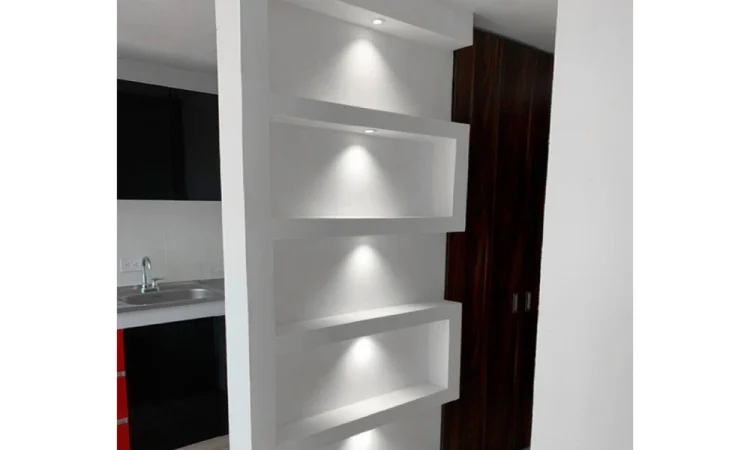
Square fittings create a distinct visual rhythm
A small square luminaire produces a different effect from a long strip under a shelf. Its shape can echo cabinet doors, modular shelving and the geometry of contemporary furniture. Repeated units emphasize the spacing of individual compartments. The design should begin with a furniture elevation that shows panel proportions and useful illumination targets. Fittings arranged around the cabinet grid usually look more intentional than units placed at arbitrary intervals.
Choose the position for the object below
A square light mounted above the centre of a compartment creates a focused pool of illumination, which is useful for sculptures, small display pieces and decorative objects. A fitting located closer to the front edge can emphasize the face of an object and reduce shadows cast by the upper shelf. Move it toward the rear to illuminate a textured back panel. Select the location according to what visitors should notice first.
Use repetition without making every bay identical
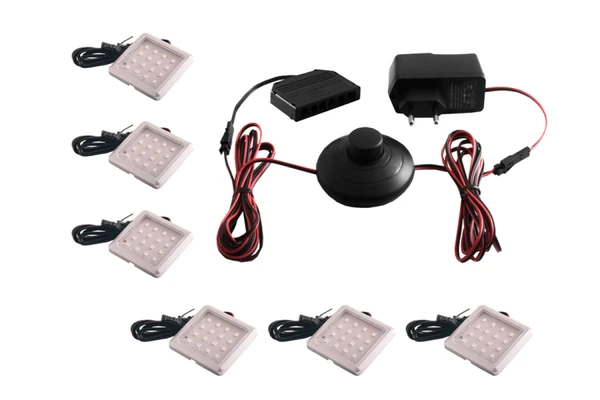
Not every storage compartment requires its own light. A combination of illuminated display bays and unlit storage bays can create a more effective composition. Square Furniture Luminaires is one product category to compare against these installation requirements. If the design calls for an ordered grid, maintain consistent setbacks and mounting heights within each group. Consider how the furniture looks when the lamps are switched off, because visible square housings remain part of the cabinet detailing.
Check dimensions and cabinet clearances
A square fixture’s outer size does not always equal its mounting cut-out. Recessed products may require extra depth for the body, spring clips and cable connections. Surface-mounted versions need enough room for screws or other specified fixings. Measure shelf thickness, internal corner distances and drawer or door clearances before preparing any openings. Test-fit one unit in a sample panel if the furniture uses expensive or difficult-to-replace finishes.
Aim for useful brightness rather than hotspots
Compact luminaires create concentrated areas of brightness, which can be attractive in display cabinets but distracting on a desk. Check beam spread, installation height and the reflectance of the surfaces below. Glossy glass and polished decorations can reflect an exposed emitter toward the viewer. Diffusion or a slightly altered mounting position may improve comfort more effectively than a lower wattage alone.
Match colour temperature across a group
A row of cabinets with mismatched white tones looks irregular even when each luminaire is properly aligned. Select a consistent light colour for related compartments unless a specific display requires a deliberate contrast. Warm lighting works with natural wood and domestic décor; neutral light is frequently useful for practical storage and retail presentation. Where accurate product colours matter, review documented colour-rendering values as well as the stated colour temperature.
Design power distribution before machining
Individual square lights commonly require separate cable drops or connectors. Plan the wiring route through vertical partitions or along concealed rear channels. Confirm the input voltage and rated power of each actual model, and select compatible distribution hardware and controls. A properly sized driver and suitable conductors are essential when several fittings share a supply. Keep connections protected and accessible for fault-finding.
Make the lighting easy to operate
Square furniture lighting can be grouped by area: a row of showcase compartments, a wardrobe section or a series of decorative niches. One shared switch is simple, while zone-based dimming gives more flexibility. Door sensors may be suitable for enclosed cupboards, depending on fixture and controller compatibility. Choose the control method according to use and plan its position before the cabinet is assembled.
Finish the cabinet as one system
Square Furniture Luminaires are worth assessing where the luminaire itself is part of the furniture geometry. Compare dimensions, mounting method, power requirements and optical design before purchase. Accurate setting-out, concealed wiring and consistent colour create a structured presentation that looks considered both in daylight and after the lighting is switched on.
Example: lighting a modular wall unit
A modular living-room wall unit has six display cubes and several closed storage compartments. The designer chooses square lights for selected open cubes, leaving the closed sections unlit. Marking each fitting relative to the cube centre creates a repeating rhythm, but the final positions are refined after trying the furniture with books, ceramics and small plants. Bright light on a glossy object may create a harsh reflection, while a darker sculpture may need more direct illumination. The electrical feed runs behind the opaque cabinet back, and the illuminated cubes operate as one zone. The result supports the furniture composition without demanding that every compartment receive identical treatment.
Planning around installation constraints
Square fittings require more detailed local preparation than a long surface-mounted linear channel. Check the visible bezel dimensions, required cut-out, installation depth and any fixing clips shown in the model drawing. A shelf with a thin laminated core may not offer enough material for a recessed fitting. Cabinet construction also limits where cables can run without interfering with cam locks, dowels and hanging brackets. Use a full-size template to test the layout before machining. On dark cabinetry, keep mounting marks temporary and protect the surface during fitting. The finished lights should align cleanly even when the cabinetry itself has small manufacturing tolerances.
Combining square lights with other sources
Square cabinet luminaires can complement a room’s ceiling lighting and wall lighting rather than carrying the full burden of illumination. Their localized pools of light help define selected displays, while general lighting handles circulation and everyday tasks. A dimming scene may let display cubes remain softly lit during an evening without making the room overly bright. Match the colour of the square fixtures with nearby light sources to avoid distracting differences. Observe the furniture from across the room and from the seating area, since direct glare appears at different angles. This final test determines whether the square fittings read as integrated furniture details or overly prominent fixtures.
For related furniture and architectural lighting components, the LEDUA catalogue https://leduastore.com/ offers a wider range of fittings, electrical accessories and installation options. Select each component from its actual technical documentation and coordinate the complete assembly before installation.


